
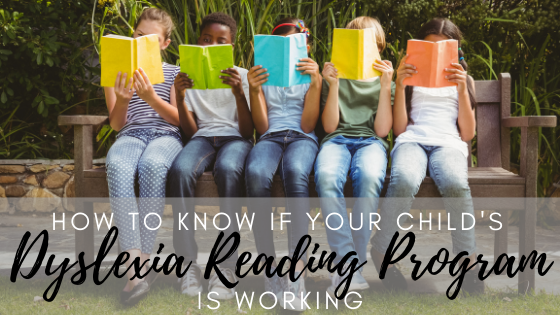
If your child has been diagnosed with dyslexia, enrolling them in an effective dyslexia reading program provides the strongest possible foundation for a successful academic career. True therapeutic intervention requires a significant investment of time and consistency before a curriculum is fully completed. However, once a child is engaged in the correct framework, parents will quickly begin to observe distinct, real-world markers of progress.
Evaluating the efficacy of an active reading program requires an understanding of evidence-based instructional design, the qualifications of the educator, and the specific cognitive shifts taking place within the student.
While formal quantitative tracking is essential, the daily behavior of a student provides immediate proof that an intervention strategy is successfully retraining language processing pathways in the brain.
Improved text comprehension is the most vital outcome of a structured literacy program. While developing an immediate love for reading for pleasure is an admirable goal, it is not the primary benchmark of mechanical progress. True progress presents itself through spontaneous, unprompted reading out in the world. Examples include decoding street signs while driving, reading the instructions on a box of food, or independently reviewing a greeting card. These micro-actions indicate that language processing is transitioning from an exhausting, manual effort into an automatic cognitive habit.
The functional impact of dyslexia extends far beyond reading and spelling classes. Foundational subjects such as mathematics, sciences, and social studies heavily rely on a student’s ability to efficiently parse text instructions and word problems. As a specialized dyslexia program begins to show systemic results, academic performance increases across the entire school spectrum.
Students navigating unmitigated dyslexia frequently experience severe frustration, chronic exhaustion, and profound disappointment due to processing language differently than their peers. This structural friction often causes children to state that they hate school. As an intervention program takes root, this baseline frustration melts away, replaced by genuine confidence and a renewed interest in learning.
Dyslexia can profoundly damage a child’s mental health, self-esteem, and self-image, causing them to internalize the false belief that they are less capable than their neurotypical classmates. Explicit therapeutic success reverses this cycle. By building predictable reading skills, the student gains clear proof of their own high competence.
An effective dyslexia reading program must be explicitly built upon the science of reading, moving systematically through five core linguistic pillars.
This is the foundational ability to identify, isolate, and manipulate individual sounds, known as phonemes, in spoken words. Because phonological processing is the primary predictor of long-term literacy success, effective programs prioritize the physical articulation and tracking of these sounds. While the English alphabet uses 26 letters, the spoken language consists of approximately 44 unique phonemes represented by various letter combinations, or graphemes.
Phonics bridges the gap between spoken language sounds and written alphabetic symbols. By mastering explicit decoding rules, students learn to systematically sound out unfamiliar terms rather than guessing based on visual context clues. This independent decoding skill is absolutely vital as students progress into multi-syllable academic texts.
Fluency is the ability to read text quickly, accurately, and with deep comprehension. When a student lacks foundational decoding skills, their entire cognitive energy is consumed by sounding out individual words, causing comprehension to drop drastically. Effective programs resolve this through high-frequency, repeated reading of decodable texts alongside structured progress incentives.
A student’s passive and active vocabulary dictates their ultimate reading comprehension ceiling. Specialized intervention expands this vocabulary through direct instruction in morphology, word relationships, figurative language, syntax, and semantics, rather than relying solely on contextual exposure.
Comprehension is the ultimate goal of literacy: actively processing written text, extracting its core meaning, and synthesizing it with pre-existing knowledge. To transition students into active readers, programs must explicitly teach strategic techniques, including comprehension monitoring, question generation, story structure analysis, summarization, inferencing, and the use of graphic organizers.
One of the most dangerous misconceptions families face is assuming that standard reading tutors or classroom teachers possess the specialization required to address dyslexia.
General academic tutoring centers on helping a student complete immediate school assignments, navigate grade-level text, or memorize spelling lists based on short-term needs. This approach is superficial; it does not address the underlying neurodevelopmental learning difference.
True clinical intervention relies on structured literacy, which fundamentally alters language processing pathways in the brain. To achieve this, the instructional design must meet five strict structural criteria:
Check our page comparing regular dyslexia tutoring and therapy.
When analyzing top dyslexia reading programs for kids, families must look for researched, evidence-based frameworks engineered specifically for language disorders.
Orton-Gillingham is not a standalone branded product; it is a diagnostic, direct, explicit, multisensory, and prescriptive instructional methodology developed in the 1930s by Dr. Samuel Orton and Anna Gillingham. It serves as the scientific foundation for all successful structured literacy programs.
Basic Language Skills, or BLS, is an intensive, comprehensive structured literacy curriculum designed by the Neuhaus Education Center. It carefully addresses all criteria of evidence-based intervention, delivering strong long-term success in spelling and reading comprehension.
Developed at the Luke Waites Center for Dyslexia and Learning Disorders at Scottish Rite for Children, Take Flight: A Comprehensive Intervention for Students with Dyslexia represents the pinnacle of modern Orton-Gillingham-based design. Built upon the historic success of Alphabetic Phonics, the Dyslexia Training Program, and the Texas Scottish Rite Hospital Literacy Program, Take Flight is a multi-year curriculum written specifically for Certified Academic Language Therapists to build automatic word recognition, fluency, and comprehension while preparing the student to transition smoothly into real-world reading settings.
A uniform, one-size-fits-all approach cannot address the distinct developmental shifts that occur as a student grows. Exceptional reading programs deploy targeted variations based on the learner’s age:
| Program Level | Target Age Group | Primary Core Focus | Curriculum Framework |
| Build | Ages 5–7 (Kindergarten / 1st Grade) | Precursor early intervention; letter recognition, phonological foundations, sight words. | Early Structured Literacy |
| Take Flight | Ages 7 to Adult (Elementary & Middle) | Comprehensive neurological rewiring, automaticity, reading fluency, text comprehension. | 2-Year Intensive Clinical |
| Jet | High Schoolers & Adults | Accelerated timeline; advanced syntax, technical vocabulary, mature comprehension strategies. | 1-Year Compressed Clinical |
Online dyslexia therapy provides incredible access to premier interventionists, completely removing geographic limitations and local specialist shortages. However, this delivery model requires parents to act as active partners in the treatment team. By combining active parent advocacy with a supportive home environment, families can significantly accelerate a student’s progress.
To achieve the best results from virtual therapy, parents should focus on four foundational pillars during at-home practice sessions:
The efficacy of even the best reading program is ultimately limited by the credentials of the person delivering it. High-level structured literacy programs are designed strictly for implementation by a Certified Academic Language Therapist (CALT).
While general reading coaches can complete brief weekend seminars or workshops, a CALT must complete comprehensive post-graduate training, complete two full years of intensive clinical coursework, accumulate over 700 fully supervised clinical instructional hours, and pass the rigorous national registration exam administered by the Academic Language Therapy Association (ALTA).
This deep expertise allows a CALT to actively analyze error patterns, measure retention metrics, and deliver a highly quantitative, diagnostic, and prescriptive treatment experience for your child.
No. School accommodations, such as extended testing time, visual aids, or assistive text-to-speech software, are designed solely to alter the educational environment so a student can manage their daily workload. They are passive adjustments; they do not alter how the brain processes written letters. A specialized dyslexia reading program is an active, clinical intervention designed to rewire language pathways, treating the root cause of the processing delay.
To achieve permanent neuroplastic changes, a program must be delivered with high frequency and intensity. The clinical standard for a comprehensive curriculum requires four hours of targeted intervention per week, typically delivered across multiple consistent weekly sessions over an average of two years. Programs that promise rapid results with minimal weekly time commitments are generally ineffective.
Yes. Virtual dyslexia therapy delivered by a skilled CALT is highly efficient. By using specialized interactive whiteboards, digital letter tiles, dual camera angles, and real-time audio-visual feedback loops, online programs create a highly focused environment completely free from traditional classroom distractions, while giving families access to elite therapists regardless of their physical location.
Many commercial options rely on generic text-level supplements or game-based software that prioritize casual engagement over explicit linguistic structure. While these tools can support surface-level sight word memorization, they fail to teach the root sound-symbol associations required for independent decoding, ultimately wasting valuable intervention years.
Progress tracking must be a completely quantitative experience. Instructors utilize constant daily data collection, tracking accurate decoding percentages, reading fluency rates, and error patterns. Parents receive frequent, transparent data reports detailing exact skill mastery benchmarks before the student is permitted to advance to more complex sequential lessons.
You do not have to navigate the complexities of structural literacy alone. Dyslexia on Demand provides elite, virtual dyslexia therapy delivered exclusively by Certified Academic Language Therapists. By utilizing the gold-standard Take Flight and Build curricula, we offer a cohesive, high-frequency, and deeply individualized environment designed to build lasting literacy skills and restore your child’s absolute confidence.
Give your student the toolset they need for lifelong learning success. Call Dyslexia on Demand at 888-292-3906, or contact us today to schedule your comprehensive, free consultation.

©2026 Dyslexia On Demand. All Rights Reserved.