
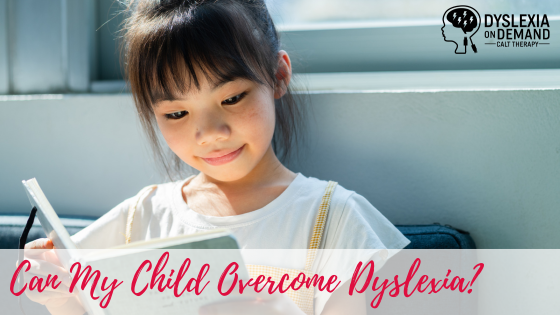
Yes, a child can overcome the functional challenges of dyslexia by retraining the brain to build new neural pathways for language processing. While dyslexia is a lifelong neurobiological trait rather than something that disappears entirely, the academic and literacy barriers it creates are completely conquerable with the right therapeutic support.
When a student receives a formal diagnosis, understanding how to overcome dyslexia shifts from a quest for a medical cure to a focus on specialized education. By pairing early identification with evidence-based interventions, students learn to read fluently, write accurately, and navigate school with complete independence.
Receiving a diagnosis often prompts parents to research how the dyslexic brain functions. A dyslexic brain is structurally different from a neurotypical brain, but these variations also bring unique cognitive advantages. Individuals with dyslexia frequently exhibit exceptional strengths in visual-spatial intelligence, complex problem solving, innovative narrative thinking, and various forms of artistic creativity.
Because the condition is a permanent reflection of how the brain is wired, parents often ask can dyslexia be cured or if the underlying neurological profile can be eliminated. While the neurological wiring remains the same, understanding how to overcome dyslexia involves capitalizing on these natural creative strengths while systematically addressing the mechanical deficits in reading and spelling acquisition.
To understand why traditional reading instruction fails struggling readers, it helps to examine the neurology of literacy. A neurotypical brain ideally relies on three distinct regions in the left hemisphere to successfully manage the reading process: one for phonemic awareness, one for word analysis, and one for rapid automatic naming.
In contrast, an uncompensated dyslexic brain primarily activates just one alternative region in the right hemisphere during reading tasks, an area that is inefficient for rapid language decoding. The core objective of intensive therapy is to build entirely new neural pathways, essentially training the necessary regions of the brain to work in tandem. Through structured, repetitive sensory exercises, this rewiring is entirely achievable.
Without targeted intervention, students with dyslexia naturally develop subconscious coping mechanisms known as compensated reading. This means they attempt to read sentences based on contextual clues, surrounding illustrations, or complete word memorization rather than actual phonetic decoding.
Relying on compensation overtaxes a student’s working memory, which quickly leads to mental exhaustion and poor reading comprehension as school textbooks become more complex. Building true literacy requires a tailored curriculum that addresses underlying sub-skills, including:
Helping a student achieve lasting academic success involves a multi-layered approach that combines clinical education, practical support frameworks, and emotional reinforcement.
Securing a formal assessment during the early elementary school years ensures that appropriate interventions are established before instructional gaps widen. Early action prevents the academic frustration that often leads to school avoidance and anxiety. If you suspect your child is struggling, initiating professional dyslexia testing provides the precise diagnostic data needed to shape an educational plan.
Standard school tutoring programs are rarely sufficient for severe reading differences. Lasting literacy progress requires a diagnostic, explicit, and systematic multisensory structured language approach. Relying on the Orton-Gillingham approach ensures that a student uses sight, sound, and touch simultaneously to anchor phonetic principles firmly in their long-term memory.
To ensure students can demonstrate their true intelligence in the classroom while they work on their reading skills, formal accommodations should be codified within an IEP or 504 plan. Highly effective tools and accommodations include:
Living with a learning disability presents challenges that extend far beyond report cards. Students frequently navigate deep feelings of academic frustration, isolation, and low self-esteem. Overcoming these hurdles requires a dedicated support network of specialists who understand both the educational and emotional facets of the condition.
Utilizing one-on-one sessions with a Certified Academic Language Therapist (CALT) ensures that dyslexia therapy remains strictly customized to your child’s evolving needs. Furthermore, connecting families with professional mental health support groups allows children to process the social-emotional impact of their learning differences alongside peers facing identical challenges. With the right clinical and emotional team in place, any student can thrive in higher education and their future professional careers.
While you cannot change the underlying neurobiological wiring of the brain, you can overcome dyslexia in terms of functional literacy. With appropriate clinical therapy, individuals can achieve high levels of reading fluency and academic independence.
You address the condition through specialized educational therapy rather than medicine. By utilizing explicit, multisensory instruction, educators help students build alternative neural pathways that process written language efficiently.
Traditional online dyslexia tutoring typically focuses on immediate homework completion or short-term classroom material. Specialized therapy targets the neurological root causes of reading difficulties using systematic, phonological retraining for long-term independence.
No, children do not outgrow dyslexia. Without explicit, structured language intervention, the reading and spelling difficulties persist into adulthood, though individuals may develop exhausting, inefficient coping habits.
The method is highly effective because it engages multiple sensory channels simultaneously. Combining auditory, visual, and kinesthetic learning styles allows the dyslexic brain to organize and retain phonetic patterns successfully.
Parents can begin by gathering evidence-based informational toolkits, school advocacy checklists, and diagnostic guidance via curated dyslexia resources tailored to guide families through the intervention process.


©2026 Dyslexia On Demand. All Rights Reserved.