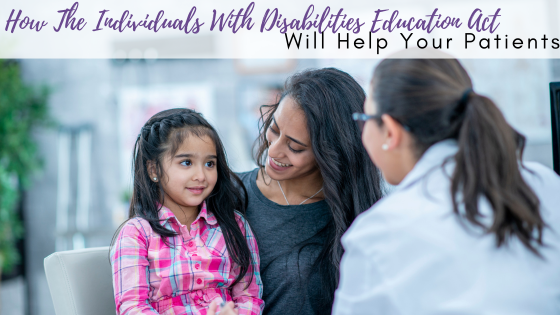


Primary care providers can be such an important part of patients’ and families’ lives. Whether parents or patients share concerns or ask questions about topics like mental health, relationships, or even experiences at school, practitioners can help to discuss different solutions. The same is true when it comes to patients who have learning disabilities. Perhaps a parent points out difficulties with reading, or maybe a patient hints at struggles in the classroom; in any case, a doctor can work with patients and families to offer guidance and figure out some next steps. One key thing to keep in mind is that it’s important to direct patients with dyslexia to qualified professionals for the right kind of evaluation and treatment. Read on to learn more about what to do when your patients need dyslexia treatment.
When it’s suspected that a patient is dealing with a learning disability, a visit with a specialist is key. This can help to identify the specific challenges, strengths, and weaknesses of a patient. In addition, working with an experienced specialist can lead to a more definitive diagnosis and a personalized treatment plan for the patient.
Dealing with dyslexia can be daunting. It is a good idea to emphasize the potential for success that comes with the right dyslexia treatment. For patients, help them to understand that a dyslexia diagnosis can be a positive thing; it can help to point a patient in the right direction to get the support and intervention they need in order to develop stronger reading and writing skills.
Providers may want to also encourage open communication between parents and teachers so that support strategies remain consistent at both home and school. Part of this communication process includes advocacy for a child’s needs in the classroom when it comes to accommodations and access.
As a medical provider, it is helpful to explain to parents the difference between academic tutoring and specialized dyslexia therapy. While many families look for general tutoring, clinical dyslexia treatment requires a systematic approach that focuses on neurological rewiring. Recommending a path that involves a Certified Academic Language Therapist (CALT) ensures the patient receives a level of intervention that standard school support often cannot provide.
While a specialist can help to determine the most suitable approaches for a patient who has dyslexia, it is essential that comprehensive dyslexia treatment programs have certain components including:
When a child transitions from a clinical diagnosis into an active treatment plan, family involvement becomes a cornerstone of long-term success. Navigating dyslexia treatment for kids requires persistence, a structured environment, and a commitment to evidence-based multi-year curricula.
Unlike short-term academic tutoring, therapeutic grade intervention relies on a progressive, multi-year curriculum to achieve lasting results. Programs utilized by specialists, such as Take Flight therapy, employ a rigorous two-year timeline. This structured approach ensures that children do not just temporarily memorize words, but systematically build baseline skills in word recognition, automaticity, reading fluency, and comprehension, preparing them to transition smoothly into real-world reading settings.
While high-frequency sessions with certified interventionists drive mechanical reading progress, the home environment reinforces that growth. Families can optimize outcomes by establishing a quiet, designated workspace specifically tailored for online therapy sessions. Minimizing auditory and visual distractions allows children to maintain the high levels of focus required during intensive language rewiring exercises.
An effective treatment strategy extends far beyond the therapist’s office. Parents play an indispensable role as primary advocates, coordinating directly with school staff to implement necessary classroom accommodations and modifications. Furthermore, by modeling active advocacy, parents teach their children to understand their own learning profiles, empowering students to speak up for their structural needs and confidently navigate their educational journeys.
To ensure the best outcomes, the dyslexia treatment plan should ideally be a point of discussion during follow-up wellness visits. When medical professionals and therapists align on the patient’s progress, it creates a cohesive support system for the child’s academic and emotional health. Monitoring the frequency and intensity of the intervention helps ensure the patient is on the right trajectory for success.
It is so important for families to know that they’re not alone in their journey to helping students with dyslexia. Whether you’re gathering more information about dyslexia or seeking a solution for actual treatment, some helpful websites to share include:
This is such a key point to drive home to patients and their families. Dyslexia on Demand offers convenient, tailored, and trusted help for students with dyslexia. See what Dyslexia on Demand has to offer:
At Dyslexia on Demand, we believe that every child ought to have the opportunity to become academically successful, no matter what learning disability or challenge they face. Refer a patient for a dyslexia consultation to our experts with more than 500 years of combined dyslexia experience. Find us at DyslexiaonDemand.com, or give us a call at 512-387-6365.
No. Dyslexia is not a disease, so it is not something that requires a medical cure. It is a lifelong neurological language processing difference that alters how the brain functions. While individuals frequently develop creative workarounds or coping mechanisms over time, they do not outgrow the underlying phonological processing challenges. Effective clinical treatment equips students with the structural tools needed to alleviate these struggles, paving the way for a lifetime of independent reading and learning.
Students with dyslexia become strong readers when they receive systematic, structured literacy instruction that addresses the specific mechanics of the condition. This requires structured, multisensory programs that place a heavy emphasis on phonics and engage visual, auditory, and kinesthetic-motor pathways simultaneously to reinforce letter-sound connections. Orton-Gillingham-based curricula stand as the gold standard for this type of learning. At Dyslexia on Demand, our therapists utilize Take Flight, an Orton-Gillingham-based curriculum engineered to build and sustain word recognition, reading fluency, and comprehension.
Early intervention is the most effective approach for long-term academic success. If a learning difference is suspected, families should seek a professional diagnosis from a qualified specialist or school testing process as soon as possible. While core dyslexia therapy programs are typically designed for students aged 7 and older, Dyslexia on Demand offers early intervention precursor programs for children as young as 5 years old. These specialized early childhood frameworks shift the developmental path, ensuring young children build the proper foundational language habits correctly from the very start.
School accommodations, such as extended testing time, audiobooks, text-to-speech software, or preferential seating, modify the educational environment to help a student manage their daily workloads. While beneficial, these tools do not treat the root of the processing problem. Conversely, specialized dyslexia treatment focuses on clinical, high-frequency intervention. It goes beyond the surface level to actively rewire neural pathways, providing a permanent solution that alters a student’s long-term learning capability.
No. All ages benefit from specialized instruction designed for their unique learning style. While early childhood intervention is optimal for balancing academic milestones, neuroplasticity continues throughout adulthood. Adults can successfully leverage structured literacy principles, specialized reading programs, and targeted occupational strategies to improve processing efficiency, written communication, and workplace productivity.
To achieve measurable, long-term neuroplastic growth, evidence-based programs require high frequency and sustained intensity. Clinical intervention is typically structured around four sessions per week over a multi-year period, ensuring the constant reinforcement needed for permanent cognitive habit formation. Leaving this specialized instruction to certified experts ensures the child receives a systematic layer of intervention that general academic tutoring cannot replicate.
The clinical gold standard for instruction is a Certified Academic Language Therapist (CALT). Unlike general academic tutors or classroom teachers, CALTs complete comprehensive post-graduate training, log hundreds of hours of supervised clinical instruction, and pass a rigorous national credentialing exam administered by the Academic Language Therapy Association (ALTA). At Dyslexia on Demand, one-on-one sessions are conducted exclusively by CALTs to provide diagnostic, explicit, and prescriptive instruction.


©2026 Dyslexia On Demand. All Rights Reserved.