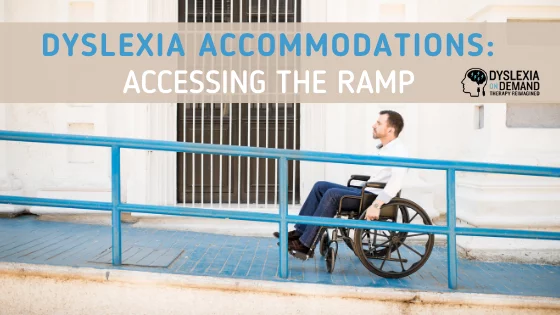
Would you ever consider asking a student in a wheelchair to take the stairs, or denying a student with a hearing impairment a translator? Accommodations for dyslexia should be viewed with the same level of necessity. They are not a “leg up” or a shortcut; they are the academic ramp that allows a student to bypass their neurological struggles with decoding to reach the same curriculum as their peers.
Simply because you cannot see the pain and the struggle of a non-apparent disability like dyslexia does not mean it is not there. For many students, these tools level the playing field and are critical for their success.
Understanding the Legal Foundation: IEP vs. 504 Accommodations
When a student is identified as having dyslexia, their support is usually managed through one of two legal frameworks. Knowing the difference is vital for effective advocacy.
504 Accommodations for Dyslexia
A Section 504 plan is born out of civil rights law. It is designed to provide “access” by removing barriers to learning. These plans ensure that a student with a disability is not discriminated against and receives the same educational opportunities as others. A 504 plan typically lists accommodations for dyslexia without necessarily providing specialized 1-on-1 instruction.
IEP Accommodations for Dyslexia
An Individualized Education Program (IEP) falls under the Individuals with Disabilities Education Act (IDEA). This is much more extensive than a 504 plan. An IEP is mandated for students who require “specialized instruction” to make progress. While a 504 plan provides access, an IEP provides a specific roadmap for therapy and intervention alongside dyslexia accommodations. If your child requires specific dyslexia therapy to close the gap in their reading levels, an IEP is often the most secure path to ensuring they reach their full potential.
Strategy: Quality Over Quantity
Many parents and educators feel that “more is better” during annual meetings, often leaving with a list of 25 or more accommodations for students with dyslexia. In the real world, this often backfires. A flood of dozens of requests can be overwhelming for both the teacher and the student, often resulting in none of them being used consistently.
It is far more effective to pick 4 to 5 critical dyslexia accommodations and focus on training the student and teacher on how to utilize them. While the school is technically responsible for implementation, parents should proactively ensure the student feels confident advocating for these tools. If self-advocacy begins in the early grades, it becomes a natural part of their school experience by high school when it is most paramount to their success.
Based on our professional experience, these are often the most impactful choices for a “quick start” toolkit:
- Extended time for reading, writing, and testing.
- Reduced assignments or visually “chunking” tasks to prevent overwhelm.
- Alternative response modes, such as verbal responses or speech to text.
- Provided notes or outlines to avoid the cognitive load of copying from the board.
- Grading for content rather than spelling or mechanical errors.
The Master List of Dyslexia Accommodations
While every student has unique needs, the following list serves as a guideline for your educational team. These can be used as a checklist during IEP or Section 504 meetings.
Reading and Instructional Supports
Reading is the primary barrier for students with dyslexia, so instructions must be delivered in a way that bypasses the struggle with decoding.
- Instructional Delivery: Break large tasks into small, manageable steps. Read written directions aloud and make eye contact when giving instructions to ensure the student is engaged.
- Audio Access: Provide books on tape, CDs, or electronic readers so the student can listen to content, especially in subjects like science and history.
- Safe Oral Reading: Create opportunities for oral reading on a one-on-one basis. Only ask the student to read aloud in class if they feel comfortable and volunteer to do so.
- Pre-reading Resources: Provide outlines, chapter summaries, and vocabulary words before a reading assignment begins.
- Visual Aids: Allow the use of highlighters to mark important parts of a text and provide shared reading or reading buddies.
- Environment: Have the student sit near the teacher for frequent check-ins. Use color-coding to help organize their desk, books, and schedule.
Writing and Assignment Modifications
Writing requires a massive amount of “brain power” for a dyslexic student, as they must manage spelling, grammar, and handwriting simultaneously.
- Alternative Response Modes: Allow the student to dictate work to a parent or aide, or provide speech-to-text software.
- Note-taking Support: Minimize the amount of copying from the board. Provide a copy of the teacher’s notes or designate a note-taker to share at the end of class.
- Spelling Relief: Do not take off points for spelling errors on written work that is not a specific spelling test. For spelling tests, reduce the number of words or allow them to be given orally.
- Reduced Volume: Minimize the amount of written work required and allow typewritten homework.
Testing and Assessment Accommodations
Tests should measure what a student knows about a subject, not how fast they can read the questions or how well they can spell the answers.
- Format Flexibility: Allow the student to take tests orally or record their answers into a device. Provide alternatives to traditional testing, such as hands-on projects.
- Time and Environment: Allow for extra time and let the student take tests in a quiet area with minimal distractions.
- Reading Support: A teacher or aide should read the test questions to the student and, if necessary, write down the student’s spoken answers exactly as they are said.
Giving Instructions and Directions
Clear and consistent directions help the student stay focused, understand expectations, and complete tasks with greater confidence and independence.
- Chunking Tasks: Break large tasks into small, manageable steps.
- Visual Reinforcement: Write schedules, classroom rules, and homework assignments on the board every morning and leave them up throughout the day.
- Direct Engagement: Make eye contact with the student when giving directions and use multi-sensory activities to further their understanding.
The Role of Assistive Technology
Assistive technology should be specifically lined out in the IEP or 504 paperwork. These tools are the modern “ramps” for the digital classroom. Essential tools include:
- Text to Speech: To help with reading comprehension of digital text.
- Speech to Text: To help the student get their thoughts onto the screen.
- Optical Character Recognition (OCR): Software that can read printed worksheets aloud.
- Proofing Tools: Applications like Grammarly to assist with mechanics.
For a deeper look at specific tools, see our full guide on assistive technology for dyslexia.
Addressing Self-Esteem and Co-morbid Challenges
Many students with dyslexia also face challenges with ADHD or ADD. These overlapping difficulties can lead to a negative self-concept. Accommodations should support both academic success and the student’s emotional well-being.
Teachers can support self-esteem by assigning classroom jobs that highlight the student’s strengths and using a positive reinforcement program. Creating “private signals” between the teacher and student can help the child indicate when they are feeling high levels of frustration without drawing unwanted attention from peers.
Ultimately, the goal of dyslexia accommodations is to ensure the student can reach their full potential. Use this list as a guideline during your next meeting to determine which supports will best help your child find success.
Seven Myths About Dyslexia Accommodations
There are many misunderstandings about how these supports work. Clarifying these myths helps reduce the stigma for the student.
Myth: Accommodations take the place of intervention.
- Fact: While accommodations can help a child with dyslexia learn in the classroom, they are not designed to help the dyslexic child overcome their learning differences. Effective, intensive dyslexia therapy offers the best chance for neurodivergent children to reach their full educational potential.
Myth: They “dumb down” the information.
- Fact: Accommodations don’t do anything to change what dyslexic children are learning, they only change how the information is presented. Dyslexic students are still expected to learn the same information as neurotypical students in their grade level.
Myth: There is only one type of accommodation.
- Fact: Designed to level the playing field for children with all types of learning disabilities, a wide range of accommodations are available to meet the needs of all children. They fall into four categories: Presentation, Response, Setting, and Timing/Schedule.
Myth: It is up to the teacher if they are used.
- Fact: Accommodations that allow children with dyslexia to learn to their full potential are mandated by federal law. If they are in an IEP or 504, the school is legally required to provide them.
Myth: They are only for testing.
- Fact: For dyslexia accommodations to be effective, it’s essential that they are an integral part of regular learning as well as testing.
Myth: They give an unfair advantage.
- Fact: Just like a ramp does not give a student in a wheelchair an unfair advantage, dyslexia accommodations do not do anything except give neurodivergent children an opportunity to learn the same material – to the same proficiency – as their neurotypical peers.
Myth: “We tried it and it didn’t help.”
- Fact: Not every support works for every child. You must work with the school to find the specific “toolkit” that matches your child’s needs.
FAQ: Frequently Asked Questions
Can my child get accommodations in college?
Yes. While IEPs do not follow a student to college, Section 504 protections do. High school students should learn to advocate for their needs early so they are prepared to request academic adjustments in postsecondary education.
Does my child need a formal diagnosis for these supports?
Generally, yes. To secure a 504 plan or an IEP, a formal evaluation is typically required to document the learning disability and the necessity of accommodations for dyslexia.
What if the teacher forgets to provide the accommodation?
This is why teaching the student self-advocacy is critical. Parents should maintain open communication with the teacher, but the student should also be encouraged to politely ask for their “ramp” (such as extra time or a quiet room) when it is not offered.