Dyslexia Accommodations: The Complete Guide for Parents and Teachers

Dyslexia accommodations guide for parents

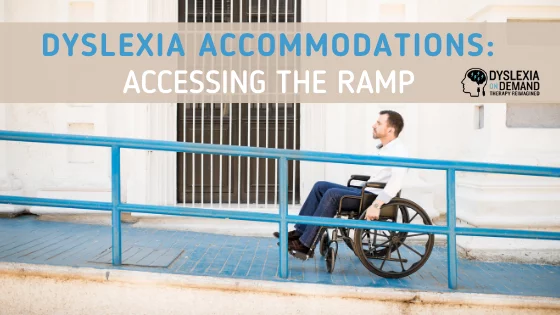
Would you ever consider asking a student in a wheelchair to take the stairs, or denying a student with a hearing impairment a translator? Accommodations for dyslexia should be viewed with the same level of necessity. They are not a “leg up” or a shortcut; they are the academic ramp that allows a student to bypass their neurological struggles with decoding to reach the same curriculum as their peers.

Simply because you cannot see the pain and the struggle of a non-apparent disability like dyslexia does not mean it is not there. For many students, these tools level the playing field and are critical for their success.

Understanding the Legal Foundation: IEP vs. 504 Accommodations

When a student is identified as having dyslexia, their support is usually managed through one of two legal frameworks. Knowing the difference is vital for effective advocacy.

504 Accommodations for Dyslexia

A Section 504 plan is born out of civil rights law. It is designed to provide “access” by removing barriers to learning. These plans ensure that a student with a disability is not discriminated against and receives the same educational opportunities as others. A 504 plan typically lists accommodations for dyslexia without necessarily providing specialized 1-on-1 instruction.

IEP Accommodations for Dyslexia

An Individualized Education Program (IEP) falls under the Individuals with Disabilities Education Act (IDEA). This is much more extensive than a 504 plan. An IEP is mandated for students who require “specialized instruction” to make progress. While a 504 plan provides access, an IEP provides a specific roadmap for therapy and intervention alongside dyslexia accommodations. If your child requires specific dyslexia therapy to close the gap in their reading levels, an IEP is often the most secure path to ensuring they reach their full potential.

Strategy: Quality Over Quantity

Many parents and educators feel that “more is better” during annual meetings, often leaving with a list of 25 or more accommodations for students with dyslexia. In the real world, this often backfires. A flood of dozens of requests can be overwhelming for both the teacher and the student, often resulting in none of them being used consistently.

It is far more effective to pick 4 to 5 critical dyslexia accommodations and focus on training the student and teacher on how to utilize them. While the school is technically responsible for implementation, parents should proactively ensure the student feels confident advocating for these tools. If self-advocacy begins in the early grades, it becomes a natural part of their school experience by high school when it is most paramount to their success.

Based on our professional experience, these are often the most impactful choices for a “quick start” toolkit:

  • Extended time for reading, writing, and testing.
  • Reduced assignments or visually “chunking” tasks to prevent overwhelm.
  • Alternative response modes, such as verbal responses or speech to text.
  • Provided notes or outlines to avoid the cognitive load of copying from the board.
  • Grading for content rather than spelling or mechanical errors.

The Master List of Dyslexia Accommodations

While every student has unique needs, the following list serves as a guideline for your educational team. These can be used as a checklist during IEP or Section 504 meetings.

Reading and Instructional Supports

Reading is the primary barrier for students with dyslexia, so instructions must be delivered in a way that bypasses the struggle with decoding. 

  • Instructional Delivery: Break large tasks into small, manageable steps. Read written directions aloud and make eye contact when giving instructions to ensure the student is engaged. 
  • Audio Access: Provide books on tape, CDs, or electronic readers so the student can listen to content, especially in subjects like science and history.
  • Safe Oral Reading: Create opportunities for oral reading on a one-on-one basis. Only ask the student to read aloud in class if they feel comfortable and volunteer to do so.
  • Pre-reading Resources: Provide outlines, chapter summaries, and vocabulary words before a reading assignment begins.
  • Visual Aids: Allow the use of highlighters to mark important parts of a text and provide shared reading or reading buddies.
  • Environment: Have the student sit near the teacher for frequent check-ins. Use color-coding to help organize their desk, books, and schedule. 

Writing and Assignment Modifications

Writing requires a massive amount of “brain power” for a dyslexic student, as they must manage spelling, grammar, and handwriting simultaneously. 

  • Alternative Response Modes: Allow the student to dictate work to a parent or aide, or provide speech-to-text software.
  • Note-taking Support: Minimize the amount of copying from the board. Provide a copy of the teacher’s notes or designate a note-taker to share at the end of class.
  • Spelling Relief: Do not take off points for spelling errors on written work that is not a specific spelling test. For spelling tests, reduce the number of words or allow them to be given orally.
  • Reduced Volume: Minimize the amount of written work required and allow typewritten homework.

Testing and Assessment Accommodations

Tests should measure what a student knows about a subject, not how fast they can read the questions or how well they can spell the answers. 

  • Format Flexibility: Allow the student to take tests orally or record their answers into a device. Provide alternatives to traditional testing, such as hands-on projects. 
  • Time and Environment: Allow for extra time and let the student take tests in a quiet area with minimal distractions.
  • Reading Support: A teacher or aide should read the test questions to the student and, if necessary, write down the student’s spoken answers exactly as they are said. 

Giving Instructions and Directions

Clear and consistent directions help the student stay focused, understand expectations, and complete tasks with greater confidence and independence. 

  • Chunking Tasks: Break large tasks into small, manageable steps.
  • Visual Reinforcement: Write schedules, classroom rules, and homework assignments on the board every morning and leave them up throughout the day.
  • Direct Engagement: Make eye contact with the student when giving directions and use multi-sensory activities to further their understanding.

The Role of Assistive Technology

Assistive technology should be specifically lined out in the IEP or 504 paperwork. These tools are the modern “ramps” for the digital classroom. Essential tools include:

  • Text to Speech: To help with reading comprehension of digital text.
  • Speech to Text: To help the student get their thoughts onto the screen.
  • Optical Character Recognition (OCR): Software that can read printed worksheets aloud.
  • Proofing Tools: Applications like Grammarly to assist with mechanics.

For a deeper look at specific tools, see our full guide on assistive technology for dyslexia.

Addressing Self-Esteem and Co-morbid Challenges

Many students with dyslexia also face challenges with ADHD or ADD. These overlapping difficulties can lead to a negative self-concept. Accommodations should support both academic success and the student’s emotional well-being.

Teachers can support self-esteem by assigning classroom jobs that highlight the student’s strengths and using a positive reinforcement program. Creating “private signals” between the teacher and student can help the child indicate when they are feeling high levels of frustration without drawing unwanted attention from peers.

Ultimately, the goal of dyslexia accommodations is to ensure the student can reach their full potential. Use this list as a guideline during your next meeting to determine which supports will best help your child find success.

Seven Myths About Dyslexia Accommodations

There are many misunderstandings about how these supports work. Clarifying these myths helps reduce the stigma for the student.

  1. Myth: Accommodations take the place of intervention.

    • Fact: While accommodations can help a child with dyslexia learn in the classroom, they are not designed to help the dyslexic child overcome their learning differences. Effective, intensive dyslexia therapy offers the best chance for neurodivergent children to reach their full educational potential. 
  2. Myth: They “dumb down” the information.

    • Fact: Accommodations don’t do anything to change what dyslexic children are learning, they only change how the information is presented. Dyslexic students are still expected to learn the same information as neurotypical students in their grade level. 
  3. Myth: There is only one type of accommodation.

    • Fact: Designed to level the playing field for children with all types of learning disabilities, a wide range of accommodations are available to meet the needs of all children. They fall into four categories: Presentation, Response, Setting, and Timing/Schedule.
  4. Myth: It is up to the teacher if they are used.

    • Fact: Accommodations that allow children with dyslexia to learn to their full potential are mandated by federal law. If they are in an IEP or 504, the school is legally required to provide them.
  5. Myth: They are only for testing.

    • Fact: For dyslexia accommodations to be effective, it’s essential that they are an integral part of regular learning as well as testing. 
  6. Myth: They give an unfair advantage.

    • Fact: Just like a ramp does not give a student in a wheelchair an unfair advantage, dyslexia accommodations do not do anything except give neurodivergent children an opportunity to learn the same material – to the same proficiency – as their neurotypical peers. 
  7. Myth: “We tried it and it didn’t help.”

    • Fact: Not every support works for every child. You must work with the school to find the specific “toolkit” that matches your child’s needs.

FAQ: Frequently Asked Questions

Can my child get accommodations in college? 

Yes. While IEPs do not follow a student to college, Section 504 protections do. High school students should learn to advocate for their needs early so they are prepared to request academic adjustments in postsecondary education.

Does my child need a formal diagnosis for these supports? 

Generally, yes. To secure a 504 plan or an IEP, a formal evaluation is typically required to document the learning disability and the necessity of accommodations for dyslexia.

What if the teacher forgets to provide the accommodation? 

This is why teaching the student self-advocacy is critical. Parents should maintain open communication with the teacher, but the student should also be encouraged to politely ask for their “ramp” (such as extra time or a quiet room) when it is not offered.

Tags:
    Leave a Reply
    Posted by
    Megan Pinchback
    info@dyslexiaondemand.com
    Megan Pinchback is the founder and owner of Dyslexia on Demand and a Certified Academic Language Therapist (CALT). She is also the co-host of the Don't Call on Me Podcast, a national speaker on dyslexia, social media educator and advocate, mom of five, and grandma to one. Through her work, she is passionate about helping families better understand dyslexia, access evidence-based support, and feel less alone in the journey.
    Real People. Real Results. Real Progress.

    What Our Families & Partners Are Saying

    Excellent
    Dyslexia On Demand5.0
    Based on 77 reviews
    Jennifer Carl
    1 week ago
    I cannot speak highly enough about Dyslexia on Demand and the impact it has had on our son, Tripp. I want to share our story because I believe it’s proof of what’s possible when the right people come alongside your child. This past spring, during a parent-teacher conference following his IOWA test results, I sat in a room with administrators and faculty as they explained—quite frankly—how much of a “problem” Tripp was perceived to be. At the time, he was being bullied by the principal’s son, and I had voiced strong concerns about the lack of structure, discipline, curriculum issues, and troubling social dynamics. I could see Tripp declining emotionally, mentally, and academically. Things had reached a point where, one day in the carpool line, he jumped out of the car and ran down the street screaming that he wasn’t going back to school. The campus police officer and school counselor became involved—but even then, the school still labeled him as the problem. I left that spring meeting with a heavy heart and a clear conviction: it was time to pull both of our children out of the school. We didn’t have a plan yet, but I knew in my gut that I could give them better than what they were receiving at the so-called “best” private school in our small town. I remember crying in the car afterward and sending Megan an emotional, long-winded email—much like this one—feeling like I had somehow failed my son. Fast forward to today, and I want to share something that still gives me chills: Tripp’s test results from Liberty University Online Academy now show that not only is he working at grade level—he is at the very top of his class. His confidence is unmistakable, and his light is back. From the deepest place in my mama heart, thank you. Partnering with Dyslexia on Demand, and with Mrs. Suzanne specifically, has been one of the greatest blessings on this journey. Their work is truly changing lives—and I have the proof, right here in my thriving boy.
    sara corder
    3 weeks ago
    Amity is amazing at keeping our 3rd grader engaged in the program and is always accommodating when needed. It has been refreshing to feel supported and not judged during times when our daughter is experiencing cognitive overload from school testing and then comes home to do more work. Amity clearly understands neurodivergent children and students with disabilities, and how their brains work. I especially appreciate her warm and gentle demeanor when our child is off task and needs redirection. There have even been times when I started to step in to encourage my child to participate, only to realize that Amity already had it handled. That level of confidence, patience, and skill is something our previous provider was lacking. I am so excited that my child can participate in therapy four times a week for an hour each session. This would have been beyond unmanageable previously. Amity is a fabulous fit, and so is your program. Everything flows so nicely.
    Abril Perea
    1 month ago
    “Watching Joseph grow through Dyslexia On Demand has been nothing short of life changing for our family. What once felt overwhelming now feels full of possibility because of the support and guidance they provide. They have helped my son build confidence, strength, and belief in himself as a learner. As parents, we are deeply grateful for the difference Dyslexia Online has made in Joseph’s life.” Thank you Abril 😀
    recommends
    We are only 2.5 months into my daughter’s Dyslexia on Demand program, and we are already seeing improvements. We opted for the group therapy lessons, and they have been great. She absolutely loves her sweet teacher, Ms. Heather, and looks forward to seeing her each week. We’ve noticed she is gaining much more confidence in her reading and is starting to truly enjoy it. I can’t wait to see what the future holds for her as she continues with the program.
    Janell Weaver
    3 months ago
    My learner never had access to structured literacy before. Dyslexia on Demand is literally changing the trajectory of their life by helping them become a reader. Edited to add- Dyslexia on Demand and our therapist Elizabeth are amazing. My son needs fairly significant support. I imagine it could be easy to feel that he is too difficult to serve given his struggles with language and attention. But Elizabeth has never wavered. I sense she's just as committed to his success as I am, and it feels like such a relief to finally have that kind of partner. She has had a tremendous impact on our family by giving us greater hope for our son's future. My appreciation for her could never be overstated.
    Janell Weaver
    3 months ago
    recommends
    Dyslexia on Demand and our therapist Elizabeth are amazing. My son needs fairly significant support. I imagine it could be easy to feel that he is too difficult to serve given his struggles with language and attention. But Elizabeth has never wavered. I sense she's just as committed to his success as I am, and it feels like such a relief to finally have that kind of partner. She has had a tremendous impact on our family by giving us greater hope for our son's future. My appreciation for her could never be overstated.
    Torrie Guerrero
    7 months ago
    Our daughter,Emersyn, has been with Dyslexia on Demand for a couple years now! We are so pleased with all the services they provide! She has had two therapists and both have been knowledgeable,patient,helpful,and kind. They see her! The curriculum is very comprehensive! Emersyn has gained so much confidence in reading and spelling! We look forward to her future progress with Dyslexia on Demand! Thank you Dyslexia on Demand!
    Esmeralda Esquivel
    7 months ago
    Amazing Amazing ultimate best online support for your brilliant dyslexic child. We are so greatful for finding this great support and learning avenue ❤️
    Nicole Hendricks
    7 months ago
    Two of my children receive therapy from Dyslexia on Demand. Both are thriving and making incredible progress! My son has been working with Brooke for less than a year and has grown in his reading skills and his confidence! His change of heart towards reading and learning has been a beautiful transition to watch and has brought me peace of mind and relief watching him get on the right track and receive the support he needed. Most extraordinarily though, my 11 year old daughter was diagnosed with dyslexia at age 7 and has struggled so much through the years. She has undergone intensive therapies and even attended a dyslexic private school for a few years, where she received specialized instruction and one-on-one therapy daily. Even after years of therapy and specialized education, she started 5th grade, last year, with a 3.2 reading level. A year later, her STAR testing showed she was starting 6th grade with a 7.8 reading level! Dyslexia on Demand and her provider, Kim, have so much to do with her progress, confidence and success. To watch that gap finally close and to witness my child read confidently is a joy I can’t describe and has been worth every investment of time and resources! I can not adequately describe the impact Dyslexia on Demand has had on our lives, but to put it simply, I am so genuinely impressed, grateful and thankful!
    Beth Thomas
    8 months ago
    I can't speak highly enough of Dyslexia On Demand - from my first conversation with Megan I felt an understanding of everything we had been dealing with through the years. She was able to quickly help me understand what my child needed and what we needed to do. My daughter is in high school and at first didn't want to think about therapy, but she loves her therapist, Suzanne. She is always ready for her session which I think speaks volumes and is continuing to build her confidence. We are excited to see her continued growth through the program.
    Tyler Watt
    8 months ago
    Dyslexia on Demand has been such a blessing for our little girl! Since starting this 2yr course which she will be finishing in a year in half- we went from not remembering site words or barely remembering sounds of letters and decoding to reading past a 3rd grade level! This has been such a treat to watch! Are therapist is like being part of our little family
    Jinni Henry
    8 months ago
    Dyslexia on Demand has been absolutely life-changing for my daughter. Before we found them, reading felt overwhelming and discouraging for her, but now she is growing in confidence every week. The one-on-one support and specialized approach have truly made all the difference. Her tutor is patient, encouraging, and really understands how to meet her where she is. Not only has her reading improved, but her overall confidence.
    Stephanie Garrido
    8 months ago
    My 9 year old daughter started Dyselxia on Demand in June 2 and this is the only intervention we have constantly seen growth with since being diagnosed with dyslexia. We immediately saw growth in fluency, ability to access curriculum and writing. Her confidence is building and we are finding her reading for pleasure which has been so heartweraring. A CALT, using a research based program is exactly what she needed. This was the answer to our prayers and we are excited to see her continue to grow! We have worked with 2 CALT's and they have both been engaging, positive, caring and great communicators.
    Hun Epps
    8 months ago
    My friend, whose SIL works for DOD, recommended the company. And I'm so grateful! Reasonably priced and my daughter's reading has astronomically improved - she's reading much better than I had ever expected after having started this past summer! She loves her therapist and she's spontaneously reading on her own with significantly improved fluency. I'm no longer worried about her confidence; her spelling as improved. I'm hoping to continue past her therapy so her reading continues to strengthen to its fullest capacity.
    Heather Adams
    8 months ago
    We’ve had such a wonderful experience with Dyslexia on Demand. My son has struggled with reading for years, but since starting with his instructor, his reading skills have improved dramatically. Even more importantly, his confidence has grown so much. He no longer gets discouraged when reading and is actually starting to enjoy it. The patience, knowledge, and encouragement provided have made all the difference. I am so grateful for the support they’ve given our family and highly recommend them to anyone whose child is struggling with reading or dyslexia.
    Kristin Hasty
    8 months ago
    Having a child with a learning difference can sometimes be difficult to navigate! Unfortunately kids don't come with a manual and definitely not children that learn "outside of the norm". Our son went to a school for kids with learning differences and after 5 years we weren't convinced he would ever read on grade level, so by the time we found DoD we were desperate. We met with Megan and she settled our mind that there was a therapist that could meet our teenage son where he was and with time and effort he would read! She paired us with a therapist that had experience working with older, maybe a little more resistant children. We love Brooke! Easton loves Brooke and he really, truly looks forward to their sessions together. Thank you so much to all of the staff at DoD and a special shoutout to our therapist, Brooke. Easons future is looking bright!
    Alisha Brown
    8 months ago
    This dyslexia program is the best of the best! We love our CALT, Lauren B.! My daughter was slow going then it clicked about 9 months in (so keep at it, trust the process)! I highly recommend Dyslexia on Demand!!
    Alisha Brown
    8 months ago
    recommends
    This program is the best of the best! We love our CALT, Lauren! My daughter was slow going then it clicked about 9 months in (so keep at it, trust the process)! I highly recommend Dyslexia on Demand!!
    Holly Moore
    8 months ago
    My daughter has had a tutor through Dyslexia on Demand for over 2 years and it was the best decision we ever made. Lisa, her tutor, is patient, accommodating to our schedule and really wants to see my daughter succeed. AMAZING COMPANY!
    Dimple Amin
    8 months ago
    My son has been doing the DOD program for 4 months now. I am impressed by how thorough the program is. The whole team is dedicated to informing and supporting both parents and their children. Our tutor is awesome! She has over 30 years of experience and is great with my son. She is also flexible with our schedule. The whole program takes a couple years on average, but for the support it offers children who would otherwise spend their school years struggling, it is well worth it. I have already seen more confidence in my son. I am glad this program offers highly qualified dyslexia tutors that we would otherwise not have access to in our area.
    We have been using Dyslexia on Demand since March of this year (it is now September) and my son's spelling has improved dramatically. Not only is he better able to articulate the spelling rules, but he is increasingly more confident in attempting to spell while writing, dramatically improving his writing abilities. Our tutor has been amazing, dealing with low confidence, occasional tricky behaviors, all the while maintaining a positive, bright attitude and making sessions engaging and fun. I'm so glad I found Dyslexia on Demand!
    recommends
    We HIGHLY recommend DOD! Megan and her team are absolutely a joy to work with! They listen and truly want what is best for your child which is all us parents want at the end of the day! Thank you DOD!
    Christine Bedre
    8 months ago
    We absolutely have loved DOD for our child! When the school to implement their dyslexia program we needed to do something on our own. Megan and her team were amazing with baseline testing. Honest conversations on what was needed to work with our child has helped them excel! We are beyond thankful!
    Jenny Milton
    8 months ago
    recommends
    The quality of instruction cannot be compared. I am a homeschool mom of 11 years. I have studied, read, trained, and explored all the options. Having professional help to conquer this mountain has been nothing but a life saver. We adore our certified academic language therapist. She is our son’s biggest cheerleader and we are so thankful we found her! The team with DOD is always there to support us. Our son, who was told would never read, is not only a reader…he is a writer! My heart will never be able to put on a page how much gratitude I have. Thank you ❤️
    Breanne Feudale
    8 months ago
    We started the DOD program over the summer, and we truly feel it’s important to continue. Our therapist has been amazing—she is extremely patient, knows exactly how to get our little one focused and ready for each session, and is flexible with rescheduling, which we really appreciate with a busy schedule. After about four months, we can already see a noticeable difference in our child’s reading and understanding of letters. This program has been such a positive and encouraging experience for our family!
    Logo with a silhouette of a head containing lightning bolts and a USB cord as the neck. Text reads “Dyslexia On Demand, CALT Therapy,” with “On Demand” and “CALT Therapy” in blue.Outline of a head with lightning bolts in the brain area, a USB cord at the neck, and the text “Dyslexia On Demand. Therapy Reimagined” to the right in large, light blue and white letters.
    We believe every child deserves the opportunity to learn to be academically successful regardless of learning style or academic challenges.