
As a new school year begins, students with dyslexia may face unique challenges in reading, writing, organization, and confidence—but also bring incredible creativity and problem-solving strengths. With the right support, classroom accommodations, and dyslexia therapy, every student can start the year ready to thrive.
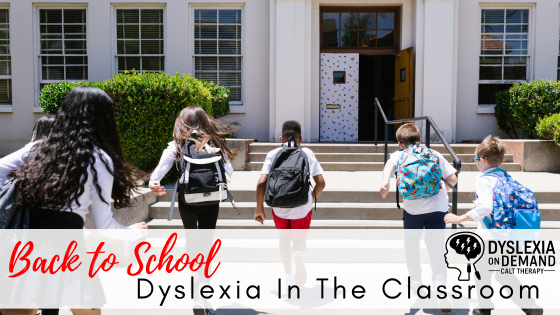
It’s back to school season. Many students are picking out new lunch boxes, backpacks, and shoes for their new school year. Some kids may love shopping for school supplies, while others might prefer to eke out the last days of summer freedom in the sunshine. Getting back into a classroom routine is a ritual that many families need to adjust to; however, for students with dyslexia, spending hours in a classroom can present some challenges. It is so important to understand the ways that dyslexia can affect a student. This is one of the first steps to providing effective support for your child. While dyslexia is primarily a language-based learning disability, it can also impact other areas of your student’s life. Have some conversations with your child and with their school staff as you begin the new school year. And read on to learn more about what parents should know about dyslexia in the classroom.
Consider the places that dyslexia challenges might show up in your child’s classroom.
Dyslexia is not all bad. With all the challenges that come with dyslexia, it’s key to note that students may have a set of great strengths as well.
Getting help outside of the classroom can boost your student’s experience inside the classroom. Dyslexia therapy—like the kind offered at Dyslexia on Demand—uses a multisensory, highly researched method to help students with dyslexia build foundational skills.
Get the good help that your child needs for a successful school year. Reach out to the experts at Dyslexia on Demand at our website.
FAQs
1. How can I help my child’s teacher understand their dyslexia?
Share your child’s diagnosis, learning profile, and any accommodations listed in their IEP or 504 plan. Open communication and collaboration between parents and teachers can ensure consistent support in and out of the classroom.
2. What are some common classroom accommodations for dyslexia?
Helpful accommodations can include extended time on tests, audiobooks, reduced copying tasks, and alternative ways to demonstrate understanding—like oral reports instead of written ones.
3. How does dyslexia therapy improve school performance?
Unlike general tutoring, dyslexia therapy targets the root causes of reading struggles using structured, multisensory techniques like the Orton-Gillingham approach. These sessions strengthen decoding, spelling, and confidence, helping students apply new skills in everyday schoolwork.
References
International Dyslexia Association. (2017). Definition of dyslexia. International Dyslexia Association. https://dyslexiaida.org/definition-of-dyslexia/
International Dyslexia Association. (2017). Classroom accommodations for students with dyslexia. International Dyslexia Association. https://dyslexiaida.org/classroom-accommodations-for-students-with-dyslexia/
National Center on Improving Literacy. (2020). Dyslexia: What families need to know. University of Oregon. https://improvingliteracy.org/fact-sheet/dyslexia-what-families-need-know
Shaywitz, S. E., & Shaywitz, B. A. (2020). Overcoming dyslexia: Second edition. Vintage.
Snowling, M. J., & Hulme, C. (2012). Interventions for children’s language and literacy difficulties. International Journal of Language & Communication Disorders, 47(1), 27–34. https://doi.org/10.1111/j.1460-6984.2011.00081.x
Eide, B., & Eide, F. (2011). The dyslexic advantage: Unlocking the hidden potential of the dyslexic brain. Penguin.
Academic Language Therapy Association. (n.d.). What is a Certified Academic Language Therapist (CALT)? https://www.altaread.org/

©2026 Dyslexia On Demand. All Rights Reserved.