
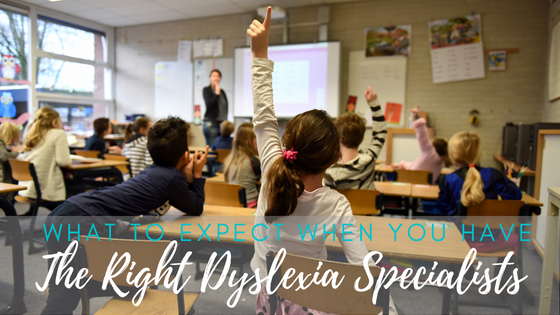
There are all kinds of individuals who can help a student with dyslexia. From caring parents at home to helpful teachers in the classroom to professional tutors, many different people are willing to help students who may be struggling with dyslexia. However, if your student is in need of more specialized, focused dyslexia help, there is one particular kind of specialist for dyslexia that can help to achieve great results with students. Certified Academic Language Therapists, also known as CALTs, are specially trained and highly qualified specialists who can offer the best kinds of intervention for students.
When parents discover ways to nurture each child’s abilities with the right kind of support, you can help them to reach their full potential. Understanding your child’s needs will help you to tailor your approach to seeking the right kind of interventions for him or her. By getting the right kind of support from a dedicated dyslexia specialist, you can help your child thrive through a holistic, evidence-based approach.
Expect experts who are clinically diagnostic and prescriptive. Working with Certified Academic Language Therapists entails a detailed and personally tailored process for your student. CALTs will work with students and then review comprehensive evaluation reports as well as academic samples. In addition, CALTs may administer academic skills assessments in order to obtain baseline documentation. Throughout therapy sessions, CALTs gather and use data from student performance, which in turn, informs diagnostic and prescriptive interventions. Altogether, for students this kind of work with Certified Academic Language Therapists creates a high level of accuracy, fluency, and understanding language skills.
Put your trust in tried and true methods. Years of research and work with students with dyslexia have produced some great programs. The right dyslexia specialist will help your student with proven programs rather than basic flashcards. Comprehensive intervention models implement Orton-Gillingham based language therapy, therapeutic dyslexia programs, evidence-based literacy instruction, and structured literacy founded in the science of reading.
For example, the Take Flight Program includes a comprehensive curriculum designed for use by CALTs. Its aim is to empower students in gaining and maintaining more word recognition, reading fluency, and comprehension. In addition to all of these skills, there is a greater goal to help students to transition from classroom and therapy session settings to learning in the real world.
Expect CALTs who are skilled in multisensory structured language. Multisensory learning can stimulate visual reading and learning. It can also use auditory, tactile, and kinesthetic methods in order to enhance the brain function of students. Integrating visual, auditory, and motor processing into the learning process helps to engage students and enhance their learning experience. Certified Academic Language Therapists work to integrate these visual, auditory, and motor processing approaches as they encourage students’ explicit understanding of the structure of the English language. This kind of multisensory structured language approach provides students with a solid foundation in written language skills.
Expect intensive, tailored therapy sessions for your student. Certified Academic Language Therapists provide expert, skilled one-to-one or small-group intervention. This allows for a great rapport between students and therapists. In addition to this, sessions should be held with high frequency over a long period of time; some dyslexia curriculum programs are about two years long. This kind of duration and frequency helps to link explicit understanding, repeated practice, and performance to student success. Intensive therapy conducted with high frequency over a sustained period of time ensures that the student achieves accurate and fluent reading with comprehension.
Expect results-driven work. Certified Academic Language Therapists help students achieve explicit understanding and application of the structure of the English language. This includes focus on phonology, morphology, syntax, semantics, pragmatics, and orthography. These skills help create the foundation for oral and written language, including reading accuracy, fluency, comprehension, spelling, and written expression. Sessions with a dyslexia specialist ought to be geared exclusively to each child’s needs.
Intelligence is not the issue. Dyslexia is one of the most common learning disabilities. While people with dyslexia may struggle with understanding the process of reading and language use, it is not indicative of below-average intelligence. Getting the right kind of help can unlock the incredible potential that an intelligent student has.
Kids who learn differently tend to have unique perspectives of the world. This isn’t a deficit; it is simply a difference. They are wired to think differently, and they process information in a way that can lead to very valuable insights and contributions in the classroom, in the workplace, and beyond. A skilled dyslexia specialist recognizes that these diverse brains afford distinct superpowers:
Great Minds and Innovation: Neurodivergent kids tend to have exceptional creativity and problem-solving skills, allowing them to discover ideas that are outside the box and think of innovative solutions to different challenges.
Keen Attention to Detail: Two of the talents afforded by this alternative processing style include a strong tendency to focus on detail and a keen ability to hyper-focus on interesting tasks.
Deep Compassion and Empathy: Because their brains are attuned to things that others do not typically tune in to, these students often develop a deep understanding of other people’s emotions, making them exceptionally compassionate communicators.
Emotional support is a major part of the puzzle. Supporting students emotionally can be just as valuable as getting academic support. Educating students about their learning difference and offering emotional support for frustration and challenges can truly empower them. One of the most powerful real-life skills that all kids can develop is grit. Having the resilience and perseverance to overcome the challenges of dyslexia on a daily basis can lead children to have strong methods of coping as well as an intense determination to succeed.
Whether you are using report cards, standardized tests, or teacher feedback to measure progress, it is important to adjust the expectations that you have. There may not be straight grades, but neurodivergence can produce something far more valuable than a standard report card; it helps a student to develop an intense work ethic.
The right dyslexia specialist will equip students with the exact skills they need to operate independently in the classroom. Students learn to take responsibility for their learning. True therapeutic intervention does not simply tutor students; it helps them grow in the areas of responsibility, independence, and self-advocacy.
Expect altruism. The specialists who work with your student should be working for the right reasons, knowing that every child deserves an equal opportunity to excel. Expect a true partnership with parents. A solid therapist-student relationship is vital, but parents must also be willing and able to partner in the remediation process. At Dyslexia on Demand, students and parents are given step-by-step guidance and compensatory strategies along the way in order to support learning at home.
For students with dyslexia, the start of a new school year can be overwhelming. There are essays, worksheets, and reading logs that can present daunting challenges. It is highly difficult for students to play catch-up when they feel they are falling behind academically. Seeking out a specialist early prevents that feeling of being left behind.
Classroom teachers are amazing human beings, and they are responsible for so much. While there can be standard accommodations and surface-level resource rooms available in a regular school setting, these are often just short-term patches. Working one-on-one with a Certified Academic Language Therapist outside of the classroom offers a fresh look at your student as a learner and provides life-changing, long-term intervention strategies.
Students with dyslexia need consistency and frequency with their academic support, meaning even the best practitioner may not be worth an out-of-the-way drive. Virtual programs offer greater accessibility and scheduling flexibility for families. Online programs schedule sessions with high frequency over a sustained period of time to ensure steady, personalized progress for your student.

©2026 Dyslexia On Demand. All Rights Reserved.